
Skydiving Facts: How It Started and How It Works
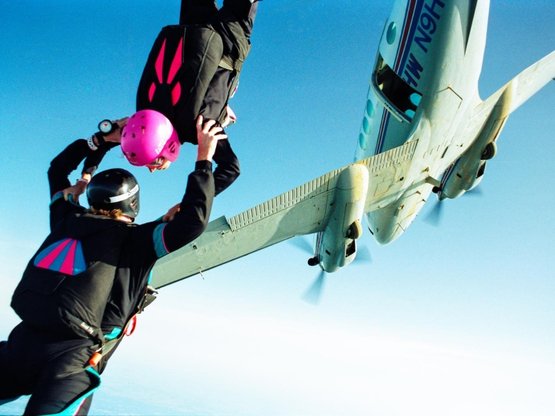
Skydiving is the sport of jumping from an aircraft, falling freely through the air and then opening a parachute to land safely. Today thousands of people make their first jump each year on a tandem skydive, strapped to an experienced instructor. Did you know that the first recorded parachute jump from a balloon took place over Paris in 1797?
A Short History of Parachuting
In 1797 André-Jacques Garnerin jumped from a hydrogen balloon above Paris using a silk parachute. Parachutes were later developed for military use, and after the Second World War former military jumpers began to practise freefall as a sport. Tandem skydiving, which lets complete beginners jump with an instructor, became widespread in the 1980s.
Numbers That Surprise People
- Altitude: most tandem jumps exit at around 3,000 to 4,000 metres.
- Speed: in a belly-to-earth position, skydivers reach roughly 200 km/h within about ten seconds.
- Freefall time: typically 40 to 60 seconds, depending on exit altitude.
- Canopy flight: after the parachute opens, the descent lasts around five minutes.
Does it feel like falling?
Surprisingly, many first-timers say it does not. Once you reach terminal velocity, the air pushes back strongly and it feels more like floating on a powerful wind than dropping.
How Safe Is Skydiving?
Modern equipment includes a main parachute, a reserve parachute and an automatic activation device that opens the reserve if needed. Tandem instructors are certified and must complete a large number of jumps before they can take passengers. Weather is checked constantly, and jumps are postponed in strong wind or low cloud.
Skydiving in Antalya
Antalya combines reliable weather with views of the Taurus Mountains and the Mediterranean coast, which makes it a popular place for a first tandem jump. Read our skydiving activities page for prices, age and weight limits and what to bring on the day.
Before your first jump
Eat a light meal, wear comfortable clothes and trainers, and tell the instructor about any medical conditions. Most centres also offer a handcam or video package, so you can relive the freefall afterwards.
 Line
 Call