
What Is Abseiling and How Is It Done?
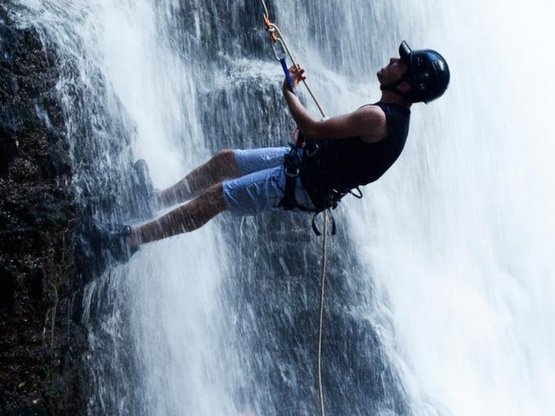
Abseiling, called rappelling in North America, is a controlled descent down a vertical face on a rope. It is a core skill in climbing, canyoning, caving and mountain rescue, and for many people it is also an adventure in its own right. Did you know that the technique is often credited to Jean-Estéril Charlet, a mountain guide from Chamonix, who developed it in the nineteenth century?
How Abseiling Works
The rope is anchored securely at the top. The person descending wears a harness with a friction device, such as a belay plate or figure-of-eight, through which the rope runs. By holding the rope below the device with one hand, called the brake hand, the person controls the speed of descent. Leaning back, feet flat against the rock and legs apart, gives a stable position.
The essential gear
- Climbing harness and helmet
- Friction device and locking carabiner
- Dynamic or static rope in good condition
- A backup knot or friction hitch below the device
- Gloves to protect hands on longer descents
Safety Rules
Most abseiling accidents happen because of mistakes at the anchor or at the rope ends, not because the equipment fails. Always double-check the anchor, tie stopper knots in the ends of the rope and make sure the rope reaches the next safe stance. Beginners should only abseil under the supervision of a trained instructor.
Where Abseiling Is Used
Climbers use abseiling to get down after a route. In canyoning, it allows you to descend beside waterfalls that are too high to jump. Cavers use it to enter deep vertical shafts, and rescue teams use it to reach people on cliffs.
Abseiling near Antalya
The limestone cliffs of Geyikbayırı, west of Antalya city, form one of Europe's best-known sport climbing areas, and climbers there abseil after almost every route. For holidaymakers, the easiest way to experience a short rope descent is on a guided canyoning tour in the Taurus Mountains.
 Line
 Call