
Rafting Terms
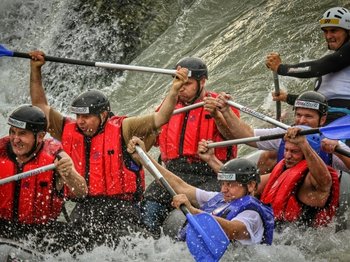
Rafting Terms Every Rafter Should Know
Rafters and guides all over the world use the same names for equipment, river features and paddle commands. Knowing them makes the sport easier to understand.
These short, international terms help a crew react quickly and calmly in fast water, wind or rain. A single word from the guide is often enough to steer the whole boat.
Rafting Equipment Terms
Raft
An inflatable boat built to international standards specifically for white-water rafting. Modern rafts have several separate air chambers and a self-bailing floor.
Drysuit
A wind- and waterproof suit worn in very cold water and weather, mainly in northern countries. It keeps water out completely and protects against heat loss and hypothermia.
Wetsuit
A neoprene suit similar to those used by divers, which keeps you warm even when wet. In Antalya's summer heat it is usually not needed, but it is useful in spring or on cold rivers.
Booties
Rafting shoes made of neoprene. They protect your feet from rocks and keep them warm, even when wet.
River and Technique Terms
White-Water Rafting
Rafting on fast, turbulent sections of a river, where the water turns white as it breaks over rocks and drops.
Body Rafting
The safe swimming position if you fall into the river: lie on your back, feet first and pointing downstream, with your face out of the water. This lets you float through the current and push off rocks with your feet.
Common Paddle Commands
- Forward: Everyone paddles forward together.
- Back: Everyone paddles backwards.
- Left back / Right back: One side paddles backwards to turn the raft.
- Stop: Stop paddling and rest the paddle on your knees.
- Get down / Hold on: Sit in the bottom of the raft and hold the safety line.
- High side: Move quickly to the side of the raft that is lifting, to stop it flipping.
Ready for Your First Rafting Trip?
Rafting is a serious sport, and every rafter, beginner or experienced, should know these basic terms. Your guide will repeat them all in the safety briefing before you start.
To join a rafting tour in Köprülü Canyon, browse our tours or call us.
The Importance of Participating in Adventure Activities

1. You improve your physical health when you get dirty. Scientists have recently said that our modern obsession with cleanliness can lead to allergies, asthma and inflammatory bowel disease. Getting dirty can be the best way to develop a strong immune system. Going on adventures means getting dirty and being healthy.
2. Outdoor activities can prevent or treat a wide range of health problems. Adventure journeys and breathing nature's oxygen are among the prescriptions recommended by doctors across the country for many ailments, from heart diseases to obesity and attention deficit disorder.
3. Adventure has no age. Everyone can turn nature into a playground. Adventure tours journey is just one part of it, it is an activity you can do throughout your life. The important thing is that you can overcome the challenges, big and small that come your way.
4. Go for a walk, get a bigger brain. Research shows that walking or hiking trains the brain. Normally when you reach middle age, your hippocampus shrinks, leading to memory loss. But a group of middle-aged adults who walked 40 minutes at a time, three times a week for a year, found their hippocampus increased by an average of 2 percent; This may increase retention rates in future years. Hiking adventures keep you mentally sharp.
5. Going on an adventure increases tolerance for uncertainty. You can learn to cope with life's uncertainties if you expose yourself to situations that don't always go as planned, such as adventure travel.
Read More
6. Adventure travel allows you to safely try out alternative lives. The best part about starting an adventure is to pretend you're doing everything you want it to be before you take a big, permanent step. You can ask yourself the question, who would you be if you lived there?
7. Going on adventures often improves thinking, which is a mental ability. Adventures give us beautiful memories that bring our minds to the forefront to remember. This means that our journey was simply "marinated"; It's an especially valuable exercise these days, when so much of what we do seems to fly by and go on forever without any real meaning. But reliving our adventures over and over gives us the time and ability to learn from them.
8. Adventure travel nourishes dreams and builds confidence. The editor of National Geographic Traveler Magazine once suggested that the Travel Cycle goes like this: Dream, plan, go, share. However, no matter how many steps are taken there, there is one thing that is certain about going to the magnificent points of nature: it becomes addictive in a short time. One wilderness does not seem to be enough; Your soul quickly craves more. And you will find yourself changing every time you go. Adventures build confidence, and with each successive event you challenge yourself a little more. I will add a fifth step to the Travel Cycle: Dream bigger.
9. Adventure experiences cure social ills. Today, we are faced with a situation that some in Turkey describe as an epidemic. The adventurous childhood has been lost in the new generation. When parents spend too much time with their children and insist on attending their every activity, they kill the child's desire to explore. And unfortunately, they constantly extinguish the spark within them. No matter what, don't kill your child's spirit of adventure for the sake of being a better parent.
10. Adventure explorers may be more important than ever in saving the world; Some scientists say it will become impossible to reverse global warming, which will accelerate climate change. If they are right, only selected groups from the public can become adventure travelers.
-
 Book Now
- Campaigns


 Line
 Call